
You came here to make something real. The pressure to make it profitable arrived shortly after.
Therapy in Silver Lake, Los Angeles
What Brought You to Silver Lake
Silver Lake used to be the place you moved when you were serious about the work. Cheap enough to take risks, weird enough to leave you alone, full of people who chose creativity over stability and meant it.
That is still true for some people. For many others, Silver Lake is now the place you move when you have made it enough to afford it, when you want the aesthetic of an intentional creative life alongside the security of a career that actually pays.
Neither version is wrong. Both produce a specific kind of pressure.
If you are building something creative here, you already know the tension. The work that started as expression is now also a brand. The practice you built around meaning is now also a product. The identity you constructed around making things is now expected to generate, to grow, to perform on a schedule that has nothing to do with inspiration and everything to do with an algorithm.
That is not a motivation problem. That is a nervous system problem. And it shows up in the body long before it shows up in your work.
The anxiety of a creative life is not about talent. It is about what happens to a nervous system that is asked to turn meaning into output, indefinitely.
Why Virtual Therapy Works for Silver Lake Clients
No parking on Sunset. No commute across the east side. No waiting room where someone from your network might see you.
Sessions are 60 minutes with up to an additional 15 minutes of time for grounding at no extra charge, fully virtual, on a HIPAA-compliant platform. You work from your studio, your home, wherever you think most clearly. For nervous system work, that is not a logistical detail. The regulation you build in session transfers directly into the environment where you actually live and create.
Private pay means no insurance record and no diagnostic paperwork that exists outside the work itself. For people whose livelihood depends on their creative reputation, that matters.

What I Work With
Creative block rooted in nervous system activation, not lack of ideas
The pressure to monetize a creative practice and what that does to the work
Identity tied to output and external validation
Burnout from sustained creative and professional pressure
Perfectionism that has stopped protecting you and started limiting you
Anxiety, trauma, and nervous system dysregulation
Practical details
"I have learned to recognize, feel, and care for my emotions in a holistic manner. I never had previously done this."
Session length: 60 minutes, with an additional up to 15 minutes of grounding
Fee: $275 per session
nsurance: Private pay. Superbill provided for out-of-network reimbursement. HSA/FSA accepted. Thrizer available for automated out-of-network billing.
Platform: Zoom (HIPAA-compliant).
Who I see: Adults 18+, throughout North Carolina.
Scheduling: Monday–Friday. Discussed in the consult.
Affirming practice: Explicitly LGBTQIA2S+ and BIPOC affirming. Gender-affirming care letters available.
"Embodied awareness is truly what Katie is all about. Within a year I was able to reconnect to my body and experience my emotions more fully than I had in years."
"My work with Katie served as the most foundational piece of accepting myself where I am at."
About Katie
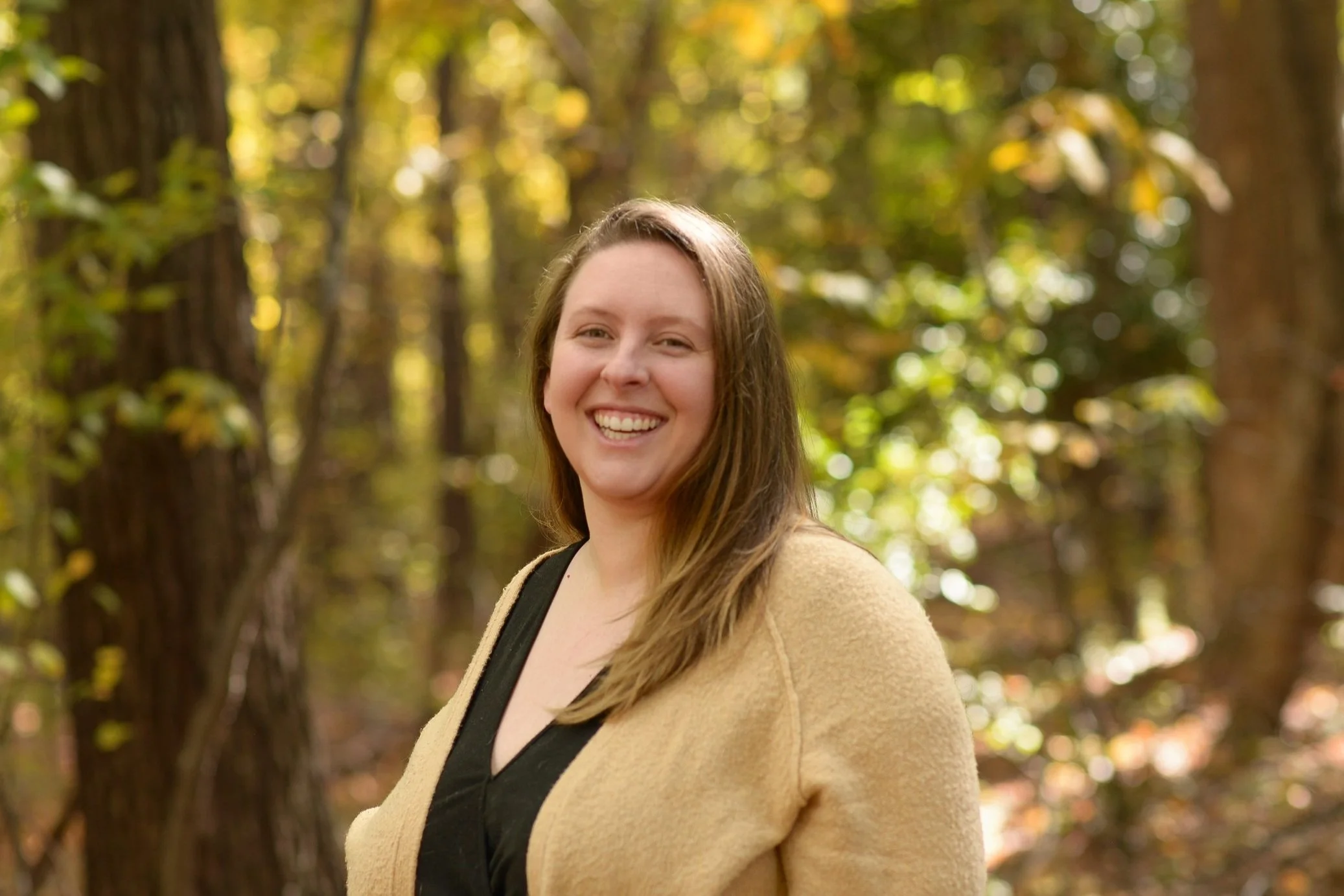
Katie Hargreaves, LCSW, LCAS has 6 years as a therapist and has conducted 4,000+ sessions working with anxiety, trauma, and nervous system dysregulation. She has resolved clinical anxiety herself. Her training draws from Somatic Experiencing (Peter Levine), polyvagal theory (Stephen Porges), and somatic modalities through Alchemy Somatics and the Embody Lab.
Sessions are virtual, 60 minutes, private pay only.
Common Questions
-
Yes. All sessions are virtual and available to clients anywhere in California, including Silver Lake and the broader east side of Los Angeles. Virtual sessions mean no commute and the same clinical depth as in-person work.
-
Yes, particularly when the block is rooted in nervous system activation rather than a lack of ideas. Anxiety, perfectionism, and chronic stress all produce a physiological state that is incompatible with creative risk-taking. Somatic therapy in Los Angeles works at that level, not just the cognitive pattern around it.
-
Talk therapy works with the narrative around your experience. Somatic therapy works with how your body is holding it. For creatives who have strong self-awareness and analytical intelligence, somatic therapy reaches the layer that analysis does not. It addresses the physiological roots of creative anxiety rather than just the story you tell about it.
-
Yes. Research consistently shows that online therapy produces equivalent outcomes to in-person work for anxiety and related presentations. For somatic therapy specifically, working from your own environment supports the nervous system regulation the sessions are building rather than requiring you to regulate in a clinical space first.