

You have every reason to be okay. But, you’re up at 11 pm, mind racing
Anxiety Therapy in Los Angeles
Online therapy throughout California
You have a life that looks, from any reasonable angle, like it is working.
And still, at 11pm, your chest is tight and your mind is already three steps ahead of tomorrow. Still, you catch yourself bracing before every meeting, every conversation, every moment that asks you to be perceived. Still, you cannot remember the last time you felt genuinely at rest.
This is not ingratitude. It is not weakness. It is what happens when a nervous system has been running at high alert for so long that it has stopped knowing how to come down.
What This Kind of Anxiety Actually Looks Like
It does not look like panic attacks in the grocery store. It looks like you.
It looks like lying awake at 1 am replaying a conversation that went fine. It looks like a physical inability to sit still even when nothing is wrong, a restlessness that follows you into weekends and holidays and the moments that are supposed to be for you.
It looks like scanning every room you walk into. Monitoring how you are coming across. Running a constant background check on whether people are okay with you, whether you said the right thing, whether you are falling behind some standard you cannot quite name.
In Los Angeles, this version of anxiety has a specific texture. This is a city that rewards performance. The hustle is the identity. Looking like you are thriving is part of the job, whether you work in a boardroom or on a set. So you get very good at looking fine. And the gap between the outside and the inside gets wider, and more exhausting, every year.
You have probably told yourself you have no real reason to feel this way. That other people have it harder. That you should be grateful. That voice is not insight. It is the anxiety talking.
Why Understanding It Has Not Fixed It
You are not someone who lacks self-awareness. You have probably read the books, done the therapy, tracked the patterns. You can explain your anxiety clearly. You might even be able to predict, to the hour, when it will arrive.
It still arrives.
This is not a failure of insight. It is a biology problem.
Stephen Porges' polyvagal theory shows us that the nervous system operates on its own logic, entirely separate from conscious thought. Peter Levine's work on Somatic Experiencing shows us that chronic stress and unresolved anxiety are held in the body, in muscle tension, in breathing patterns, in the constant low-level readiness to brace, not in the narrative you tell about them.
Cognitive approaches work at the level of meaning. They are useful. They are also insufficient on their own for anxiety that lives in the body.
That is not a flaw in you. It is a limitation of the tool.
If you want to understand how your nervous system works before starting therapy, the Nervous System Guide breaks it down.
“Anxiety is not a thinking problem. It is a physiology problem. Therapy that only addresses one will only go so far.”
The Somatic Approach to Anxiety
Somatic therapy works at the level where the anxiety actually lives.
Rather than focusing on reframing thoughts, sessions work with real-time body awareness. What happens in your chest when you talk about that relationship? Where does your breath go when you say that out loud? What does your body do in the half-second before you walk into a difficult conversation?
Over time, that awareness builds something more useful than understanding. It builds capacity. The ability to notice activation early, before it has taken over. The ability to move through it rather than white-knuckling it or avoiding it entirely. A nervous system that has more range, more flexibility, more access to states that are not high alert.
This is slower work than symptom management. It is also more durable. You are not learning to cope with anxiety. You are changing the conditions that produce it.
Who This is For
High-achieving professionals in LA
You are performing at a high level and exhausted in a way that does not show. The competence is real. So is the chronic activation underneath it. You want a therapist who meets you past the insight stage.
People who have tried therapy and hit a ceiling
Talk therapy helped. It did not finish the job. You understand your patterns and you are still anxious. You are ready to work at a different level.
Creatives and entertainment professionals
The uncertainty is structural in your industry. The audition cycle, the development cycle, the constant external validation loop. Your nervous system has adapted to that environment in ways that no longer serve you off the clock.
The person who looks completely fine
High-functioning anxiety is invisible from the outside. You show up, you deliver, you hold it together. The internal noise is constant and exhausting. You deserve support that takes that seriously.
About Katie
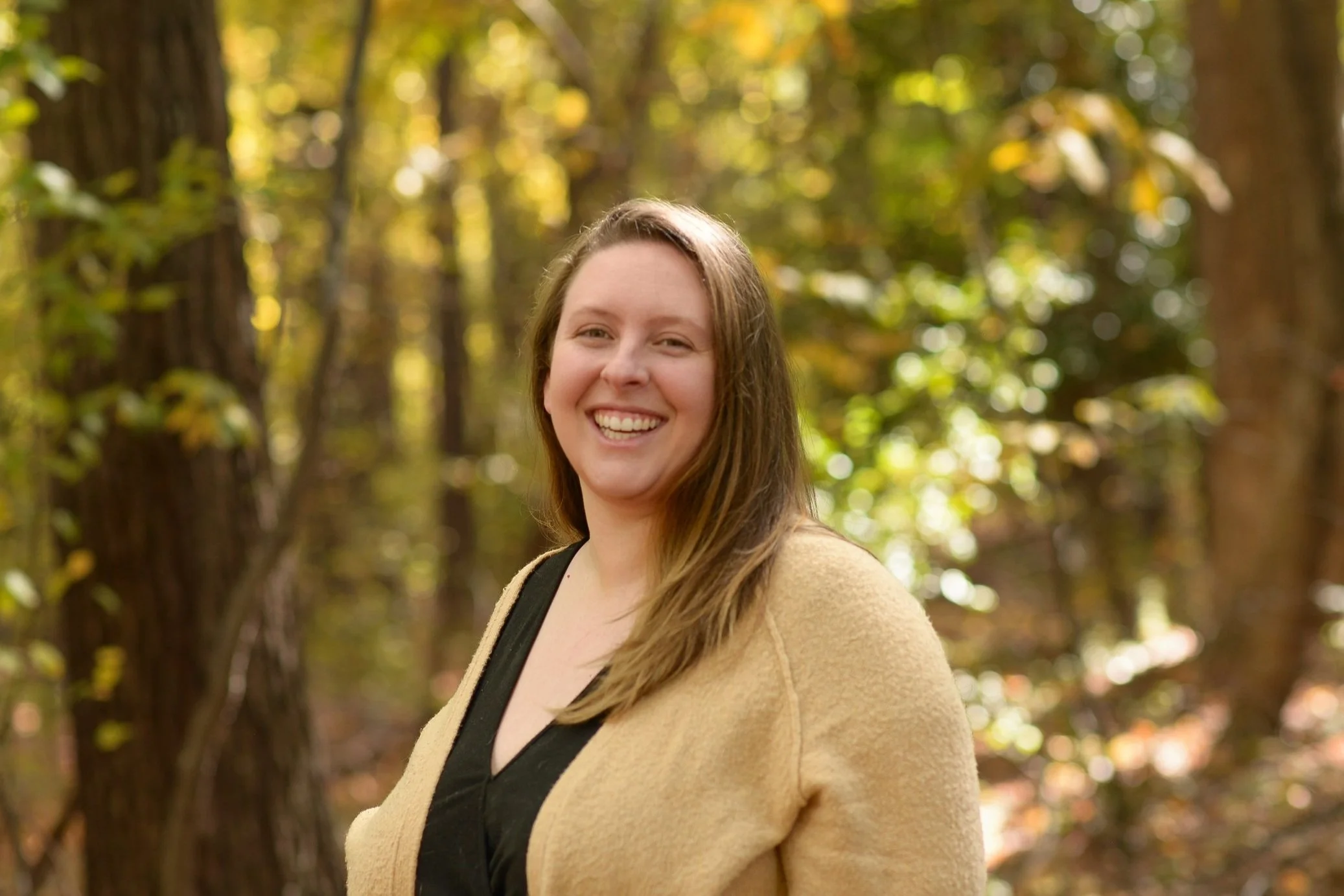
Katie Hargreaves, LCSW, LCAS has resolved clinical anxiety herself. That is not a footnote. It shapes every session, because she knows the difference between understanding anxiety and actually changing it.
She has 6 years as a therapist conducting 4,000 sessions working with anxiety, trauma, and nervous system dysregulation. Her training draws from Somatic Experiencing (Peter Levine), polyvagal theory (Stephen Porges), and somatic modalities through Alchemy Somatics and the Embody Lab.
Sessions are private pay. That means no insurance record, no diagnostic codes that follow you, and no third party involved in your care. All sessions are conducted virtually. Learn more about online therapy in California and for more on fees and insurance options, visit the FAQ page.
Common Questions about Anxiety Therapy in Los Angeles
-
I actually wrote a blog post about the most effective treatment for anxiety.
The most effective treatment depends on where the anxiety is living. Cognitive approaches work well for anxiety rooted in thought patterns and beliefs. For anxiety that persists despite good self-awareness, body-based approaches like somatic therapy address the physiological layer that cognitive work does not reach. Research supports a combination of approaches for complex or chronic anxiety.
-
High-functioning anxiety describes chronic anxiety in people who appear to be managing well from the outside. They are often high-achieving, reliable, and capable. Internally, they are running a constant background process of worry, hypervigilance, and self-monitoring. It is not a clinical diagnosis, but it is a real and exhausting experience that responds well to somatic work.
-
Because anxiety is not primarily an intelligence problem. Self-awareness is genuinely useful and it operates at the cognitive level. Anxiety is a physiological state generated by the nervous system. Understanding why you are anxious does not change the body's baseline activation. That requires working directly with the nervous system, which is what somatic therapy does.
-
Most clients notice a meaningful shift in their relationship with anxiety within 8 to 12 sessions. Longer-standing or more complex patterns take more time. This work is not designed for brief symptom management. It is designed to change how your nervous system responds, which is a more durable outcome that requires consistent work over time.
-
Yes. Somatic therapy is particularly well-suited for anxiety because it addresses the physiological root rather than just the cognitive expression. Peter Levine's Somatic Experiencing approach has a strong evidence base for anxiety and trauma. For people who have tried cognitive approaches without lasting results, somatic therapy addresses the layer those approaches do not reach.
-
For most people, the goal is not the absence of anxiety but a fundamentally different relationship with it. The nervous system will always respond to genuine threat. What changes with somatic work is the baseline activation level, the speed of recovery, and the capacity to move through anxious states rather than being controlled by them. Many clients describe this as anxiety becoming something they have rather than something that has them.
-
Click on the “Book a Free Consultation” button to schedule here.
-
Yes, particularly when the approach addresses the physiological layer of anxiety rather than just the cognitive one. Work-related anxiety in high-performance environments tends to be deeply conditioned into the nervous system over years. Reframing thoughts about work helps to a point. Somatic therapy works with the baseline activation level that professional environments produce, which is what determines how much of your internal experience is driven by anxiety versus genuine present-moment response.
-
For high achievers, anxiety rarely looks like visible distress. It looks like hypervigilance disguised as diligence, perfectionism disguised as standards, and an inability to rest disguised as drive. The internal experience is a constant background hum of threat assessment, self-monitoring, and forward planning that never fully switches off. High achievers often do not identify it as anxiety because it has been present for so long it feels like personality.
-
Stress is a response to an identifiable external pressure. It typically resolves when the pressure does. Anxiety persists independently of external circumstances. It is the nervous system continuing to generate a threat response even when the immediate stressor is gone. For high achievers in demanding environments, chronic stress can condition the nervous system into a state of baseline anxiety that no longer requires a specific trigger to activate.
-
Performance anxiety is chronic activation of the stress response in contexts where you are being evaluated or observed. It produces physical symptoms like a racing heart, shallow breathing, and muscle tension, alongside cognitive symptoms like self-monitoring and anticipatory dread. The most effective treatment addresses both the cognitive patterns and the physiological response. Somatic therapy works at the nervous system level, which is where performance anxiety is generated and where lasting change happens.