
Your nervous system regulates faster somewhere safe. For most people, that's home.
Online Therapy in Los Angeles, CA
Serving Hollywood, Los Feliz, Silver Lake, West Hollywood, and throughout California.

The logistics of in-person therapy in LA are a real barrier.
Not a minor inconvenience. An actual barrier that keeps people from getting help.
You're already managing a full life in a city that runs on hustle and performance. If starting therapy means:
Adding 45 minutes of driving to an already fractured schedule
Finding parking in Hollywood while dysregulated enough to need therapy
Fitting a 50-minute session plus transit into a lunch break that was already too short
Sitting in traffic afterward when your nervous system is wide open from the session
Worrying someone from work will see you walking into a therapy office
Then "I'll start therapy eventually" becomes the permanent plan.
Online therapy removes every one of those barriers. Same clinical depth. Same quality of relationship. None of the LA logistics.

Why online therapy works for nervous system regulation
Somatic therapy is body-based work, which leads some people to assume it requires an in-person setting. It does not.
The work happens through verbal guidance, relational attunement, pacing, and presence. Your nervous system responds to the quality of the therapeutic relationship, not the physical room you are sitting in. Research on telehealth outcomes for anxiety and trauma is consistent. Virtual sessions produce equivalent results to in-person when the therapeutic relationship is strong.
Many LA clients find that working from home actually deepens the work. You are already in a regulated environment. Your couch, your lighting, your dog in the room. You do not have to build safety from scratch in a clinical office. Stephen Porges's Polyvagal Theory points to environmental cues as a primary input to autonomic state. Your own space gives your nervous system more cues of safety than any therapist's office can.
What I Work With in Online Sessions
Anxiety & High-Functioning Anxiety online
The chronic background activation that LA professionals and creatives carry without naming it as anxiety. Online sessions let us catch the activation in the environment where it usually happens, which makes the work more relevant than activation that only shows up in an office.
Burnout & Chronic Stress
The physiological version, where rest has stopped working, where you are still producing but feel increasingly hollow. Working from home in session means you can practice nervous system regulation in the exact space where the burnout developed.
Trauma & PTSD
Single-incident trauma, relational and developmental trauma, complex PTSD. Somatic approaches address trauma where it lives, in the body's responses, drawing from Peter Levine's Somatic Experiencing and the research compiled in Bessel van der Kolk's The Body Keeps the Score. Virtual format does not reduce the depth of this work.
Relationship Anxiety & Anxious Attachment
The nervous system patterns driving hypervigilance in close relationships. Online sessions allow us to work with these patterns in real time as they show up between sessions, with shorter feedback loops than a weekly office visit allows.
Identity-based Stress & Anxiety
For LGBTQ+ individuals, BIPOC clients, and anyone carrying the chronic stress of navigating environments that are not fully safe. Working from your own home removes one layer of vigilance and allows deeper work. This practice is explicitly LGBTQIA2S+ and BIPOC affirming.

The approach: body-based, not talk-only
Most therapy works primarily with thoughts, patterns, and history. That work has real value. My approach goes a layer deeper.
Somatic therapy works directly with the nervous system's physiological state. Rather than analyzing anxiety from the outside, we work with what is happening in the body in real time. Sensation, activation, breath, holding patterns. We use those as the primary site of change.
Anxiety is not a thought pattern. It is a physiological state. The autonomic nervous system's threat response operates below conscious thought, faster than reasoning, independent of what you understand about yourself. Changing how you think about anxiety does not change the underlying state. Somatic therapy addresses that state directly.
The framework draws from Polyvagal Theory (Porges), Somatic Experiencing (Levine), sensorimotor psychotherapy (Ogden), and trauma neuroscience (van der Kolk). This is evidence-based clinical work, not wellness-adjacent support.
For more depth: What is somatic therapy? | Somatic therapy Los Angeles, CA | Anxiety therapy Hollywood, CA
How online sessions work
Sessions are 60 minutes via a HIPAA-compliant telehealth platform. All you need is a private space and a reliable internet connection. A home office, a quiet bedroom, or a parked car between commitments all work.
The 60-minute format is clinically relevant. Somatic work needs enough time to move through activation, processing, and regulation within a single session. A session that ends while your nervous system is still activated does not produce the corrective experience the approach depends on. You leave settled, not stirred up. For that reason, we will continue for upto 15 minutes to get you grounded at no additional charge.
You will get a reminder email and text before each session with a link to the telehealth room. Click the link, enter your name in the waiting room, and the session starts. Nothing to download.
Many clients find virtual sessions easier than in-person, not harder. If you have relational trauma or feel nervous around mental health professionals, the slight remove of telehealth often allows you to open up faster.
The Details of Online Sessions
"I have learned to recognize, feel, and care for my emotions in a holistic manner. I never had previously done this."
Session length: 60 minutes, with up to 15 additional minutes for grounding
Fee: $275 per session
Insurance: Private pay. Superbill provided for out-of-network reimbursement. HSA/FSA accepted. Thrizer available for automated out-of-network billing.
Platform: HIPAA-compliant Zoom
Who I see: Adults 18+, throughout California.
Scheduling: Tuesday–Friday with evening availability. Discussed in the consult.
Affirming practice: Explicitly LGBTQIA2S+ and BIPOC affirming. Gender-affirming care letters available.
"Embodied awareness is truly what Katie is all about. Within a year I was able to reconnect to my body and experience my emotions more fully than I had in years."
"My work with Katie served as the most foundational piece of accepting myself where I am at."
Step 1
Book a free good-fit consultation with me via my online scheduler to determine if my therapy services are a good fit.
Step 2
Discuss goals, format, and what you are hoping to shift. Ask any questions.
Step 3
Begin sessions. I am currently scheduling new California therapy clients about 6 weeks out.

Areas Served in California

Hollywood, Los Feliz, Echo Park, Silver Lake, West Hollywood, Mid City, Studio City, Sherman Oaks, East Hollywood, Glendale, San Diego, the Bay Area, Marin County, and Orange County.
Available to clients anywhere in California.
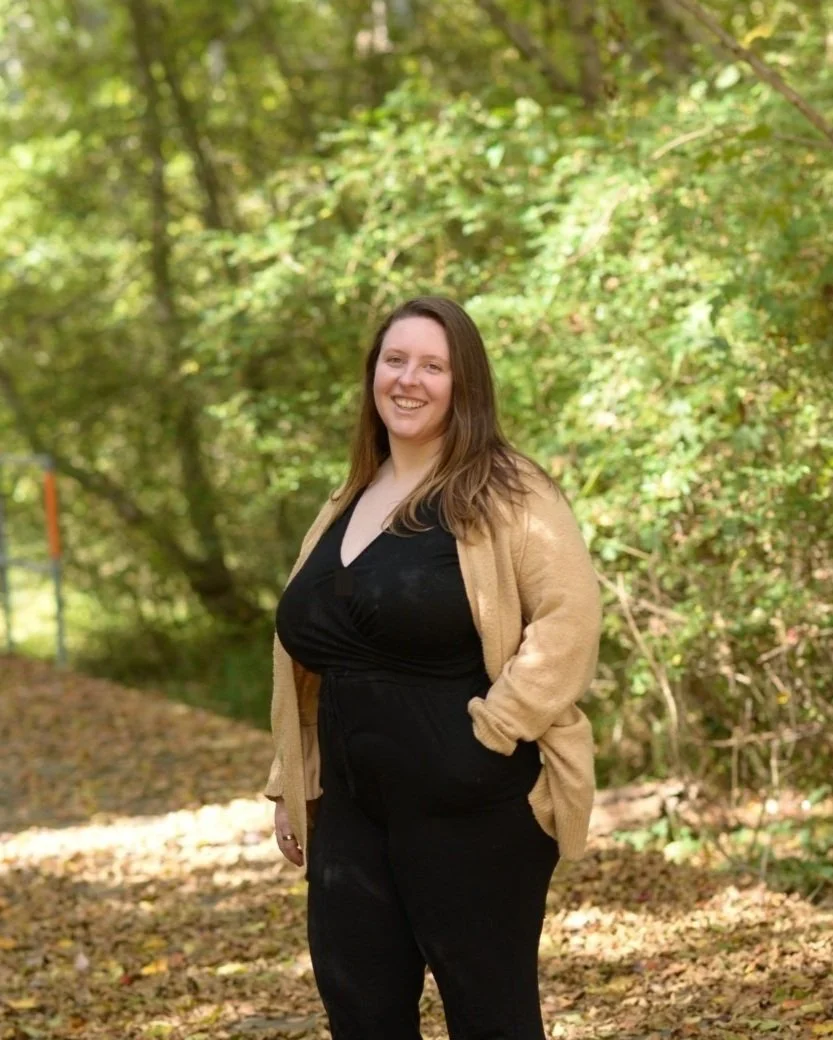
About Katie
Katie Hargreaves is a somatic therapist and nervous system specialist serving clients in Los Angeles and throughout California. She has over 6 years as a therapist, more than 4,000 sessions, and her own lived experience resolving clinical anxiety, which informs how she works. Her training integrates somatic therapy through Alchemy Somatics, polyvagal-informed regulation through The Embody Lab, breathwork, parts-based approaches, and trauma-informed processing. Her practice is explicitly LGBTQIA2S+ and BIPOC affirming.
FAQs about Online Therapy in Los Angeles
-
A space where you will not be interrupted and where you feel comfortable speaking openly. A bedroom with the door closed, a home office, a parked car, a quiet spot with headphones. It does not need to be a formal office. We talk through your setup on the consult call.
-
Yes. Therapy is legally protected by confidentiality regardless of profession or public profile. Private pay means your sessions do not go through insurance, which means no employer or insurer has any record of your treatment.
-
No. A device with a camera and microphone (laptop, tablet, or phone) and a reliable internet connection. You will get a reminder email with a link before each session. Click, enter the waiting room, start.
-
Yes. I see clients anywhere in California by telehealth.
-
Yes. Research on anxiety, trauma, and depression shows telehealth produces equivalent outcomes to in-person when the therapeutic relationship is strong. For somatic work, the relational attunement that drives nervous system regulation happens through voice, pacing, and presence. None of that requires physical proximity.
-
This practice is LGBTQIA2S+ and BIPOC affirming. Gender-affirming care letters are available for clients who need them.
-
The work is body-based and evidence-informed. Results cannot be guaranteed, and I will do my best to support you in meeting your goals. We use the consult to talk through whether the approach fits what you are looking for.
-
Individual talk therapy and somatic therapy. I do not see couples. All sessions are informed by a somatic therapy lens.
-
All therapy is conducted via HIPAA compliant telehealth software.
-
I am out of network with all insurances. I accept out-of-network benefits, HSA, and FSA cards, and partner with Thrizer for automated reimbursement. Private pay, to meet your needs, not your insurance company's.
-
Sessions are $275 for 60 minutes with up to an additional 15 minutes at no cost for grounding.
If you would like to use out-of-network benefits, I partner with Thrizer to help process those claims.
-
Click on the “Book a Free Consultation” button. This will connect you directly to my schedule. Or you can use my online scheduler.
-
The call will be via telephone and last 20-30 minutes. Our goal is to see if we are a good fit to move onto the first session.
It’ s good to come with any questions you have about what our work would look like. I’ll ask you some questions about what brings you to therapy, and what you want out of therapy. At the end we will decide if we want to try a first session together.