

Online Therapy in North Carolina
Serving Raleigh, Durham, Charlotte and Chapel Hill
Somatic and anxiety therapy for high-achievers across the Research Triangle — and beyond.

You've done the work. So why doesn't it feel different?
You've probably read the books. Maybe you've tried therapy before — CBT, talk therapy, journaling. You understand your patterns better than most people understand themselves.
And yet.
Your stomach still tightens before meetings. You still replay conversations at 2am. You still can't fully relax on the weekends, even when nothing is technically wrong.
That's not a failure of insight. That's a nervous system that hasn't caught up to what your mind already knows.
This is where somatic therapy is different. We don't work on what you think. We work on what your body is still holding — the survival responses that never fully discharged, the hypervigilance that runs quietly in the background no matter how much you understand about yourself.
This is the work that actually changes how anxiety feels in your body. Not just how you think about it.
Ready to feel different, not just think differently?
Who I work with in North Carolina
People across North Carolina find me when they're done managing their anxiety and ready to resolve it. They tend to be:
Professionals in Raleigh's tech, biotech, and healthcare sectors who perform at a high level externally — and carry significant internal pressure they rarely let anyone see.
Durham-area creatives, researchers, and Duke-connected academics who are deeply thoughtful, often perfectionistic, and find that traditional talk therapy helps them understand themselves but doesn't quiet the noise.
Chapel Hill students, faculty, and healthcare workers who have learned to push through exhaustion and can't remember the last time they felt genuinely at ease.
LGBTQ+ individuals across North Carolina who are tired of having to educate their therapist, explain their identity, or brace for microaggressions before they can even get to the actual work. You deserve a space where you're fully seen from session one.
Anyone across the state who has been told their anxiety is "not that bad" but knows that living on high alert 24/7 is no way to live.
A nervous system approach — not just another coping strategy
Traditional therapy often focuses on thoughts. Change the thought, change the feeling. And sometimes that helps.
But anxiety isn't primarily a thought problem. It's a physiological one.
Your nervous system learned at some point — through stress, loss, pressure, relationship pain, or experiences you may not even consciously remember — that the world wasn't entirely safe. And once your nervous system learns that, it keeps applying that lesson, even when your life has changed entirely.
What I do is different. We work directly with your body's stress responses to help your nervous system complete what got interrupted, discharge what got stored, and build the felt sense of safety that allows anxiety to actually resolve — not just get managed.
This approach includes:
Somatic (body-based) awareness and processing
Polyvagal-informed nervous system regulation
Breathwork and grounding practices
Parts-based work for self-criticism and perfectionism
Trauma-informed processing for anxiety rooted in past experiences
All of this is available to you online, from anywhere in North Carolina, in 60-minute sessions designed to give your nervous system enough time to actually shift — not just check in with an additional 15 minutes to ground as needed at no charge.
Therapy in North Carolina, by city


Anxiety Therapy in Raleigh
Raleigh is one of the fastest-growing cities in the country. The Research Triangle Park, the booming tech and biotech corridors, the pressure to perform in a city that rewards ambition — it creates a specific kind of anxiety. High output. High visibility. High internal cost.
Many of my Raleigh clients look completely fine from the outside. Their anxiety lives in the body: chest tightness before presentations, the inability to stop working even when they're exhausted, a persistent undercurrent of dread that doesn't attach to anything specific.
Anxiety Therapy in Durham
Durham has a particular energy — creative, progressive, intellectually alive. It's also a city full of people who feel deeply, think constantly, and hold a lot.
My Durham clients often come to therapy having already done significant self-work. They understand attachment theory. They've read the nervous system books. What they haven't found yet is a way to get out of their heads and into their bodies — which is exactly where the change happens.

Anxiety Therapy in Chapel Hill
Chapel Hill holds a unique kind of pressure. UNC, the UNC Health system, the academic and medical culture — it creates an environment where intellectual achievement is the baseline and rest can feel like failure.
Students, clinicians, researchers, and faculty come to therapy when they realize that performing well and feeling well have completely split apart. Somatic therapy helps close that gap by addressing anxiety where it actually lives — in the body, not just the mind.
Learn more about Chapel Hill Anxiety Therapy.
Anxiety Therapy in Charlotte
Queen City is a major financial and business hub, home to some of the largest banks and corporations in the country alongside a fast-growing professional class navigating high-stakes careers.
Many clients seeking anxiety therapy in Charlotte describe performing well externally while carrying a level of internal pressure that rarely lets up.
Common themes include:
sustained high performance with no real off switch
anxiety tied to professional identity and fear of losing ground
difficulty separating self-worth from productivity
chronic tension that has become so familiar it reads as normal
burnout that looks like ambition from the outside
Therapy can help you understand what's driving the pressure beneath the performance — and begin shifting it at the nervous system level rather than just managing it.
LGBTQ+ affirming therapy in North Carolina
North Carolina's political landscape makes finding truly affirming care harder than it should be. I offer a practice where LGBTQ+ identity isn't a footnote — it's centered.
Whether you're navigating coming out, gender transition, relationship dynamics, identity-related anxiety, or simply want a therapist who already understands your life without needing a primer, you're welcome here
Learn more about LGBTQ+ affirming therapy in NC

What Pattern I Work With
Many clients seeking therapy in North Carolina are navigating patterns such as:
High-Functioning Anxiety
You look like you have it together — and mostly you do. But your nervous system is running a constant threat-detection scan in the background. You're efficient, capable, and quietly exhausted by how hard you work to stay that way.
Chronic Stress and Burnout
You've been operating past your capacity for so long that you can't remember what normal feels like. The exhaustion is bone-deep. Rest doesn't restore you. Somatic therapy helps your nervous system shift out of the survival state that's keeping you stuck there.
Relationship Anxiety and Anxious Attachment
You know your patterns. You know you overthink texts, catastrophize silence, brace for abandonment even when there's no real threat. What you haven't been able to do is make it stop — because anxious attachment isn't a mindset problem. It lives in the nervous system, and that's where we address it.
Panic and Nervous System Overactivation
Panic attacks. Racing heart. Derealization. The sense that something terrible is about to happen even when nothing is. These are your nervous system firing a false alarm — loudly and convincingly. We work to turn down the volume at the source, not just talk about it after the fact.

Identity-based anxiety
For LGBTQ+ individuals, BIPOC clients, and anyone navigating life in a world that hasn't always been safe for them, anxiety often has a specific texture. It's not just individual — it's relational, cultural, and sometimes political. I hold all of that.
What Shifts When the Work Actually Works
My clients don't just get better at managing anxiety. They stop experiencing it the way they used to.
They describe:
Sleeping through the night for the first time in years
Making decisions without the weeks-long spiral
Feeling present in their bodies, not just their heads
Relationships that feel safer and less exhausting
The physical sensation of calm — not as an achievement, but as a baseline
This isn't about trying harder. It's about your nervous system finally learning that it's safe to settle.
“Somatic therapy changed my life. The progress I was able to make has made me feel more in control, safe, and loved by myself.”
“She knew exactly when to push and when to pull back, and was careful to provide a process that was safe and inclusive for myself as a neurodivergent and queer person.”
Suggested Resources
If you’re exploring anxiety therapy, these articles may also be helpful:
These resources explain how anxiety patterns develop and how therapy can help shift them.
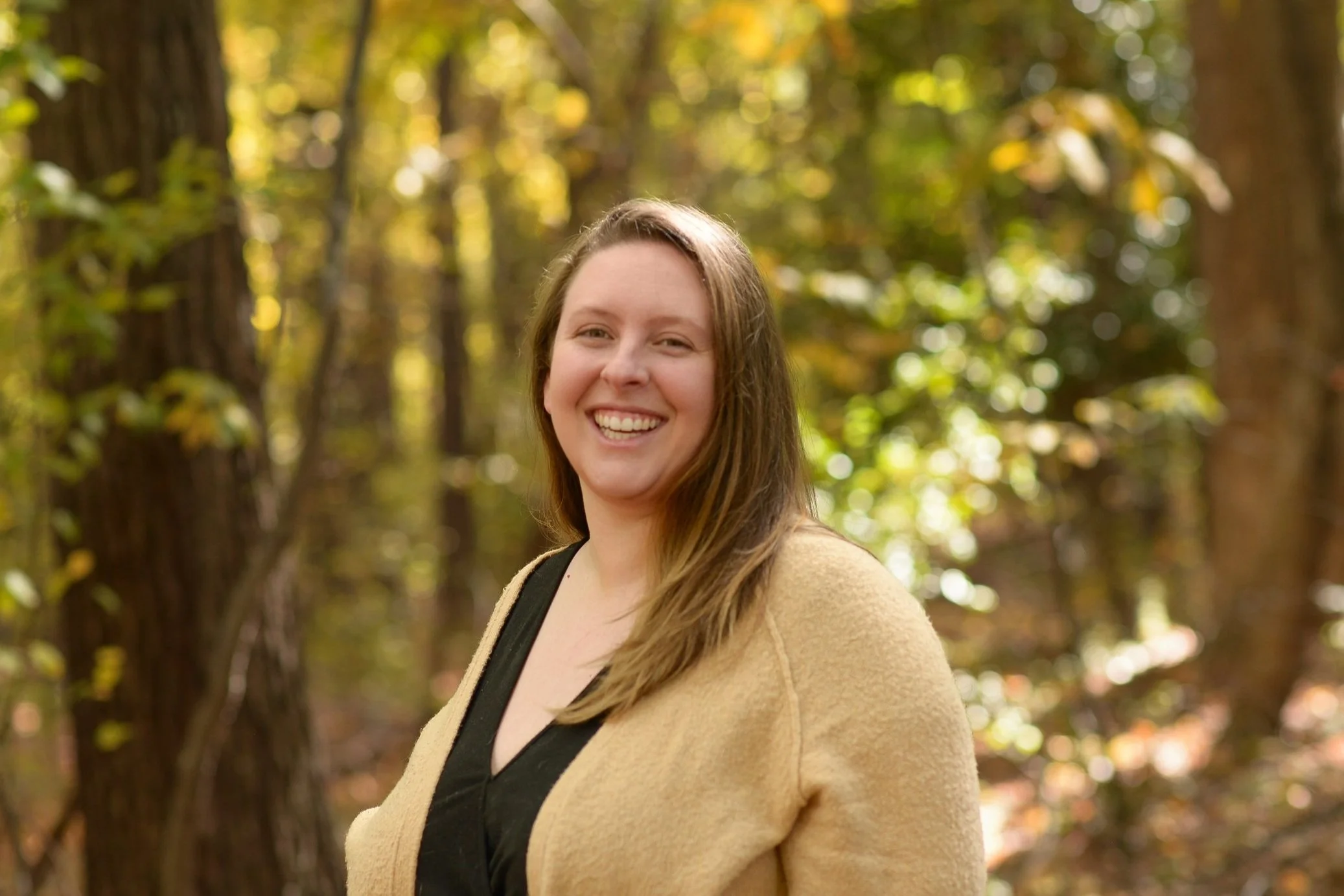
About Katie, your North Carolina Therapist
Katie Hargreaves, LCSW, LCAS, is a somatic therapist and nervous system specialist licensed in North Carolina. She brings over 6 years in mental health and more than 4,000 sessions to her work — along with her own experience navigating and fully resolving clinical anxiety.
Her training includes somatic therapy through Alchemy Somatics, polyvagal-informed approaches through The Embody Lab, and additional study in breathwork, trauma, and nervous system regulation. She works with adults across North Carolina via secure, HIPAA-compliant online sessions.
Her practice is explicitly LGBTQIA2S+ and BIPOC affirming.
Sessions are 60 minutes. No insurance panels. She keeps her caseload intentional so she can show up fully regulated for every client. Because co-regulation is part of how this works.
Learn more about Katie | Check out our FAQs | Find us on Google — Chapel Hill, NC
Ready to start?
Here's how it works:
Step 1
Book a free 15-minute consult. We talk about what's bringing you to therapy, what you want your life to look like, and whether we're a good fit.
Step 2
Schedule your first session. 60 minutes, online, from anywhere in North Carolina.
Step 3
Start the actual work. Not just talking about anxiety. Shifting it.

FAQs about Online Therapy in North Carolina
-
Yes. Somatic therapy works through verbal guidance — I guide you through grounding, body awareness, and processing using your voice and your attention to sensation. You don't need to be in the same room for your nervous system to shift. Many clients find working from their own home actually accelerates the work because they're already in a space that feels safe.
-
No. I'm a private-pay practice. This allows me to work with fewer clients, offer longer sessions, and provide the kind of depth and continuity that insurance-panel therapy rarely allows. A 75-minute session is $225.
I can provide a superbill for potential out-of-network reimbursement and I accept HSA/FSA cards as payment methods. I want to offer the best care to my clients in North Carolina that is not dictated by insurance.
-
That's probably the most common thing I hear. Traditional talk therapy helps many people understand their patterns — but understanding isn't the same as resolution. If you've done the cognitive work and still feel anxious in your body, somatic therapy addresses what talk therapy doesn't reach.
-
No. I work with clients everywhere in North Carolina via online therapy. Raleigh, Durham, Chapel Hill, Charlotte, Asheville, Wilmington — anywhere you have a private space and a stable internet connection.
-
It's not a badge. I have worked with queer and trans clients throughout my career and approach that work with genuine knowledge, not performative allyship. You won't need to explain what a pronoun is or why your relationship structure is valid. We start from there.
Katie Hargreaves, LCSW, LCAS | Licensed in North Carolina | Online therapy statewide Chapel Hill, NC | hello@katiehargreavestherapy.com | 323-208-9182