Does Online Therapy Work for Anxiety? What the Research Says
Online therapy for anxiety works. That is not a marketing claim, it is what the research consistently shows.
A 2018 meta-analysis published in the Journal of Anxiety Disorders found that internet-delivered cognitive behavioral therapy produced outcomes equivalent to in-person therapy for anxiety disorders. More recent studies on telehealth therapy during and after the pandemic confirmed those findings across a broader range of presentations and populations.
If you have been on the fence about starting therapy because you were not sure whether virtual sessions could actually move the needle, the short answer is: they can. The longer answer is about what makes them work, and what to look for when choosing a provider.
Why People Still Have Doubts
The skepticism about online therapy is understandable. Therapy has traditionally been an in-person experience, and there is a reasonable intuition that something important happens in a shared physical space.
That intuition is not entirely wrong. There are presentations like severe trauma, active psychosis, certain dissociative conditions, where in-person care is strongly preferable, and sometimes necessary. A good clinician will tell you if your situation is one of them.
But for the anxiety presentations most common in working professionals like high-functioning anxiety, chronic stress, burnout with anxious features, and worry that will not switch off, the research does not support the assumption that virtual delivery is a meaningful limitation.
What the research does support is that the quality of the therapeutic relationship is the strongest predictor of outcome, across delivery formats. A strong working relationship with a skilled clinician in a virtual format outperforms a weak relationship with a mediocre clinician in any format.
What Online Therapy for Anxiety Actually Looks Like
Virtual sessions work through a secure video platform. You join from wherever you are, your home, your car between meetings, or a private office. Sessions are 60 minutes, with space for an additional 15 minutes of grounding as needed.
For somatic therapy specifically, virtual delivery requires some adaptation but does not change the core of the work. Somatic approaches involve tracking physical sensations, noticing where the body holds tension, and working with the physiological signature of anxiety directly. All of that is visible and workable on video. Clients often find that being in their own space actually supports the work — they are already in the environment where anxiety shows up, rather than a neutral clinical office.
Peter Levine, whose somatic experiencing framework informs much of this approach, has described the therapeutic relationship as the primary vehicle for nervous system change. That relationship is built through attention, attunement, and clinical skill, not through physical proximity.
The Practical Case for Virtual Therapy
Beyond the clinical research, there is a practical argument for online therapy that matters for busy professionals.
No commute. A 60-minute session does not require 90 minutes of travel on top of it. You can finish a session and be back at your desk, or at your kitchen table, in minutes.
No geographic limitation. You are not choosing from the therapists within a 20-minute radius of your office. You are choosing from everyone licensed in your state who is the right clinical fit.
In North Carolina, virtual therapy is available to anyone physically located in the state at the time of the session. That means the full Triangle like Raleigh, Durham, Chapel Hill, as well as Charlotte and anywhere else in NC.
Consistency. One of the most underrated factors in therapy outcome is simply showing up regularly. Virtual sessions remove the friction that causes people to reschedule. A bad weather day, a packed morning, a last-minute schedule shift, none of those cancel a virtual session the way they might cancel an in-person one.
What to Look for in an Online Therapist for Anxiety
Not all virtual therapy is the same. When you are evaluating providers, a few things are worth paying attention to.
Clinical specialization. Generalist therapists can be excellent. But if your presenting issue is anxiety, specifically the high-functioning, hard-to-name kind common in professionals, a clinician with focused expertise in anxiety and nervous system dysregulation will move faster and more precisely than someone who works across a broad range of issues.
A somatic or body-based framework. Most online therapy for anxiety defaults to CBT or talk-based approaches. These have real value. They also have a ceiling for clients who are already analytically skilled and self-aware. If you understand your anxiety well and still feel stuck, a somatic approach works at a different level, directly with the body's held stress patterns rather than the narrative around them.
Session length. Fifty-minute sessions are standard. They are also often too short for somatic work. Seventy-five minutes creates enough space to move past the surface, slow the nervous system down, and actually do the work rather than spend the session getting oriented. For more about what happens check out: What to expect in your first somatic session
Private pay. Insurance-based therapy involves a diagnosis in your record, session limitations, and third-party access to your treatment notes. Private pay removes those constraints. For professionals in Charlotte, Raleigh, Durham, Chapel Hill, and across NC, that confidentiality is often a significant factor.
A Note on Starting
Most people who have been considering therapy for a while are not waiting for more information. They are waiting to feel ready, or waiting for things to get bad enough to justify it.
High-functioning anxiety rarely gets dramatically worse overnight. It depletes slowly, in ways that are easy to rationalize as normal. The clients who come in earliest in that process consistently do the most efficient work and leave with the most durable results.
If you are in North Carolina and wondering whether virtual therapy could work for you, a free 15-minute consultation is a low-stakes way to find out.
About the Author
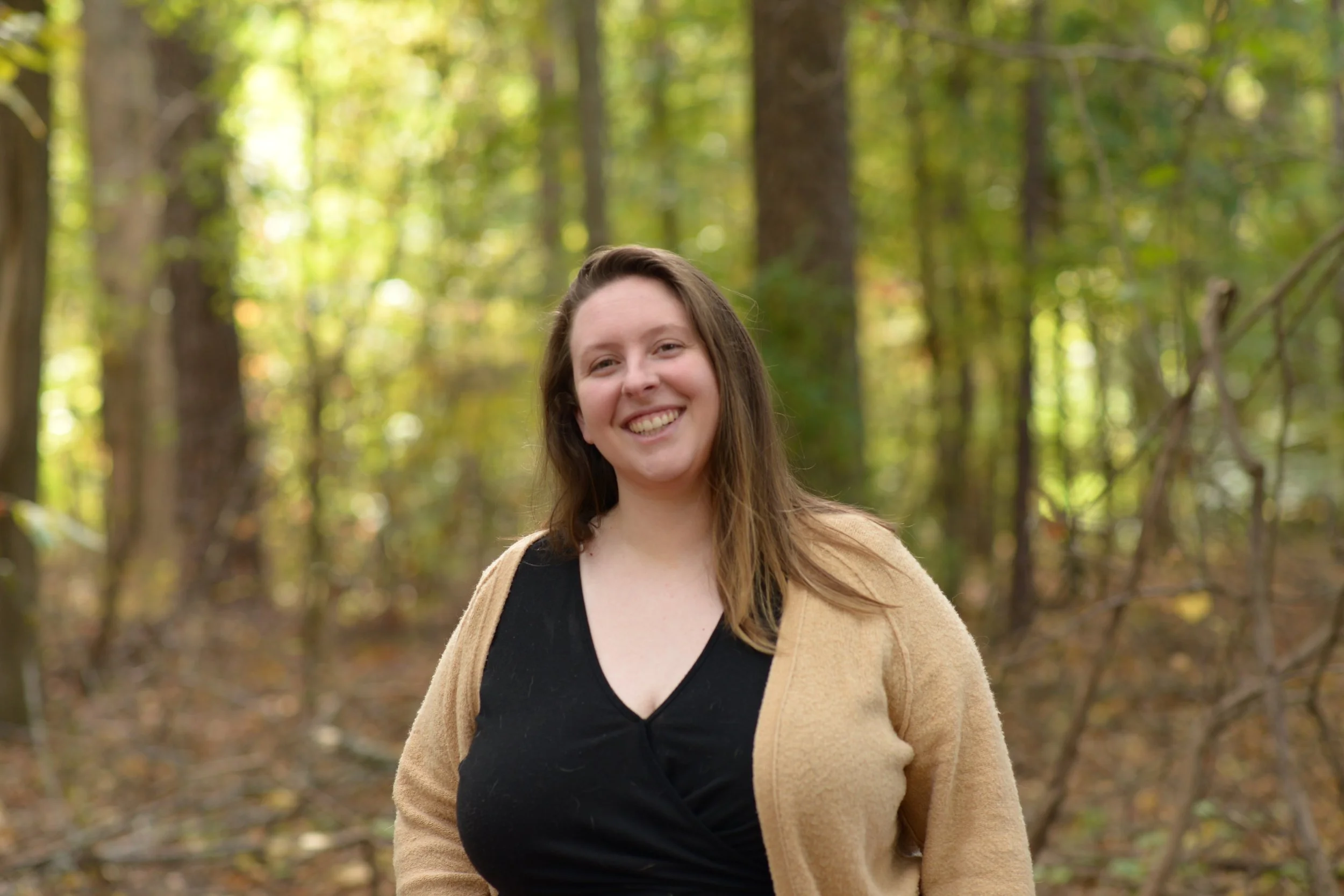
Katie Hargreaves is a Licensed Clinical Social Worker (LCSW) and Licensed Clinical Addictions Specialist (LCAS) with a somatic therapy practice serving clients across North Carolina and Los Angeles. She works fully virtually, with 60-minute private pay sessions, and specializes in anxiety and nervous system dysregulation in high-achieving professionals. She draws on polyvagal theory, somatic experiencing (Peter Levine), and the clinical research of Bessel van der Kolk and Pat Ogden.
FAQs
Is online therapy as effective as in-person therapy for anxiety?
For the anxiety presentations most common in working professionals, yes. Multiple meta-analyses, including research published in the Journal of Anxiety Disorders, show that internet-delivered therapy produces outcomes equivalent to in-person care. The strongest predictor of outcome across both formats is the quality of the therapeutic relationship, not the delivery method.
Can somatic therapy work over video?
Yes. Somatic therapy involves tracking physical sensations, noticing body tension, and working with the physiological experience of anxiety directly. All of that is accessible on video. Many clients find that working from their own environment actually supports the process, because they are in the space where anxiety shows up rather than a neutral clinical office.
Does online therapy work for severe anxiety?
For most presentations of anxiety, including high-functioning anxiety, generalized anxiety, and panic, virtual delivery does not compromise outcomes. There are some presentations where in-person care is strongly preferable. A qualified clinician will tell you if yours is one of them during an initial consultation.
Who can access online therapy in North Carolina?
Anyone physically located in North Carolina at the time of the session can work with a therapist licensed in NC. This includes clients in Raleigh, Durham, Chapel Hill, Charlotte, and anywhere else in the state.
What should I look for in an online therapist for anxiety?
Look for focused clinical specialization in anxiety rather than a generalist practice, a somatic or body-based framework if insight-based approaches have not moved the needle, session lengths of 60 minutes and an additional 15 to ground for deeper work, and private pay if confidentiality is a priority. The clinician's training, modality, and fit matter far more than whether sessions happen in person or online.