Anxiety Therapy in Chapel Hill, NC: What Works When Insight Isn't Enough
If you're looking for anxiety therapy in Chapel Hill, NC, you've probably already done a lot of work on yourself.
You've read the books. You understand your patterns. You know where the anxiety came from.
And you're still anxious.
Chapel Hill draws researchers, clinicians, academics, and healthcare workers. People who are exceptional at understanding things. People for whom insight comes easily and relief, somehow, does not.
This post is for that person.
Why Understanding Your Anxiety Isn't Always Enough
Chapel Hill sits at the center of one of the most research-dense corridors in the country. UNC Chapel Hill, UNC Health, a thriving graduate community, a culture that rewards intellectual rigor.
It's an environment that produces people who can explain their anxiety in precise clinical detail and still lie awake at 3am.
This is not a failure of intelligence or effort. It's a feature of how anxiety works.
Anxiety doesn't start in the thinking brain. It starts subcortically, in the amygdala's threat-detection system, which processes perceived danger faster than conscious thought. By the time you're aware you're anxious, your nervous system has already activated. Your heart rate is already up. Your muscles are already bracing.
This is why cognitive understanding hits a ceiling. The prefrontal cortex and the amygdala are not well-connected enough for one to overwrite the other. You can understand your anxiety completely and your body will still respond as if the threat is real.
For a full breakdown of this, the Nervous System Guide for Anxiety covers the neuroscience in depth, including why body-based treatment reaches what cognitive approaches often don't.
What Anxiety Looks Like in Chapel Hill
The presentation I see most often in Chapel Hill clients isn't panic attacks or visible distress. It's quieter than that.
It's a mind that never fully stops. A baseline of low-grade vigilance that has been present so long it reads as personality rather than symptom. An inability to rest without guilt. Perfectionism that functions as a threat-management strategy rather than genuine high standards.
It looks like someone performing at an extremely high level and exhausted by the cost of it.
Common patterns include:
Chronic overthinking that accelerates at night or during transitions
Difficulty separating professional identity from self-worth
Physical symptoms like tension, shallow breath, gut issues, and disrupted sleep that have been normalized as just how things are
Emotional numbing after sustained periods of high output
Hypervigilance in relationships, especially around conflict or perceived disapproval
Rest that doesn't restore because the nervous system never fully comes down
If you're a clinician yourself, you'll recognize all of this and still find it difficult to apply to your own experience. That's not uncommon. Understanding a framework and inhabiting it are different things. The body doesn't update through conceptual knowledge alone.
For the physical signs specifically, the post on signs your nervous system is stuck in fight or flight covers the full pattern in detail.
A Different Approach to Anxiety Treatment
Somatic therapy works with the nervous system directly rather than around it. Instead of focusing on thought patterns and beliefs, we attend to what's happening physiologically. Where tension lives. How breath changes. What the body does when something activating comes up in conversation.
This isn't an alternative to rigorous clinical work. It's a different layer of it, one that addresses the physiological dimension of anxiety that cognitive approaches often don't reach.
In sessions, we track body sensation alongside conversation, build your window of tolerance, and work with stress responses that have been stored rather than completed. Over time this builds genuine regulatory capacity rather than better symptom management.
For Chapel Hill clients specifically, a few things tend to matter:
The science holds up. The neuroscience underlying somatic approaches, including Porges' Polyvagal Theory, Levine's Somatic Experiencing model, and van der Kolk's research on subcortical trauma encoding, is published in peer-reviewed literature and increasingly mainstream in trauma and anxiety treatment. If you want to understand the mechanism before you trust the method, it's there.
Sessions are 75 minutes. Somatic work needs time to open, process, and close. The regulated close matters. You don't leave a session mid-process. This is one of the structural differences between somatic therapy and standard 50-minute models.
It's fully virtual. Chapel Hill clients get the same depth of work without commuting across the Triangle. For people running demanding schedules at UNC or UNC Health, that matters.
For the full picture of how somatic therapy is practiced across NC, the Somatic Therapy North Carolina page covers the approach in detail. The North Carolina Online Therapy page is a good starting point if you're still orienting to what's available across the Triangle.
Who This Work Tends to Help in Chapel Hill
Somatic anxiety therapy tends to be a strong fit for:
Clinicians and healthcare workers. People who spend their professional lives holding space for others' distress often have the least access to their own. Compassion fatigue and secondary traumatic stress are real clinical phenomena and they respond well to nervous system-focused work.
Graduate students and academics under sustained pressure. The combination of intellectual intensity, financial precarity, and identity investment in graduate training produces a specific flavor of anxiety. High-functioning, often invisible, deeply embedded in how you work and relate.
People who've hit the insight ceiling. If you've done good therapeutic work, understand your patterns clearly, and your body still doesn't feel safe, that's the clearest signal that the next layer of work is physiological, not cognitive.
People skeptical of vague wellness approaches. Somatic therapy is clinically grounded. The mechanism is explainable. The evidence base is real. If you need to understand something before you trust it, this approach accommodates that.
Starting Anxiety Therapy in Chapel Hill
All sessions are fully virtual. If you're in Chapel Hill, Carrboro, or anywhere in the Triangle, you get nervous system-focused anxiety treatment without geographic compromise.
The first step is a free 15-minute consultation. No intake paperwork, no commitment. A conversation about what's bringing you in and whether this approach makes sense for where you are.
Ready to work with your nervous system instead of around it? Virtual anxiety therapy for Chapel Hill and Triangle clients. No waitlist.
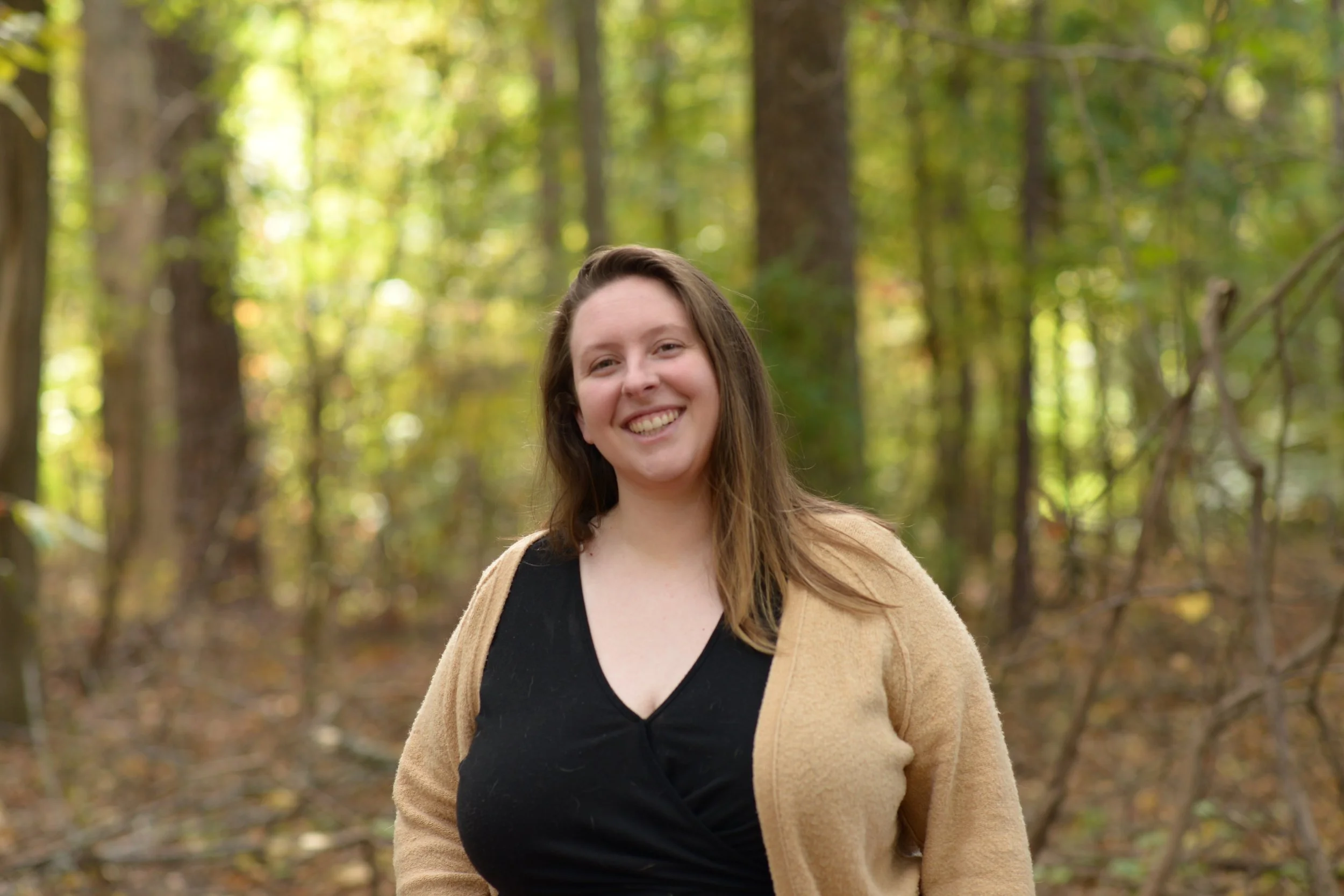
About the Author, Katie Hargreaves, LCSW, LCAS
Katie Hargreaves, LCSW, LCAS, is a somatic therapist specializing in anxiety and nervous system regulation for high-achieving professionals in Los Angeles and North Carolina. With over 12 years in the mental health field and more than 4,000 clinical sessions, she helps clients resolve chronic anxiety by working directly with the nervous system. Katie is trained in Alchemy Somatics, polyvagal-informed therapy, breathwork, and somatic coaching. Her work combines evidence-based psychology with body-based approaches to help clients create lasting safety, resilience, and emotional balance.